Mapping Nigeria’s Smallholder Farmers for Smarter Policy
Published on September 13, 2025
Imagine a tailor who wants to sew clothes for fifty grooms men for a traditional wedding but refuses to take their measurements. He simply cuts fabric based on guesswork, hoping the clothes will fit somehow. Some will end up too tight, others too loose, a few might be wearable, but most will sit in the corner, unused and unwanted. That’s what policy looks like without data. Beautiful on paper, ineffective in practice.
There are countless policies and interventions by the Nigerian government crafted with the good intention of ‘helping the people’ from farmers, women, youth, to rural communities. But help can’t hit its target if it’s shooting blind. How do you allocate resources to women farmers if you don’t know how many they are, where they are, what they grow, what tools they lack, or what access they have to markets? Interventions without data are not only inefficient; they are dangerous. They give the illusion of progress while entrenching the very problems they claim to solve.
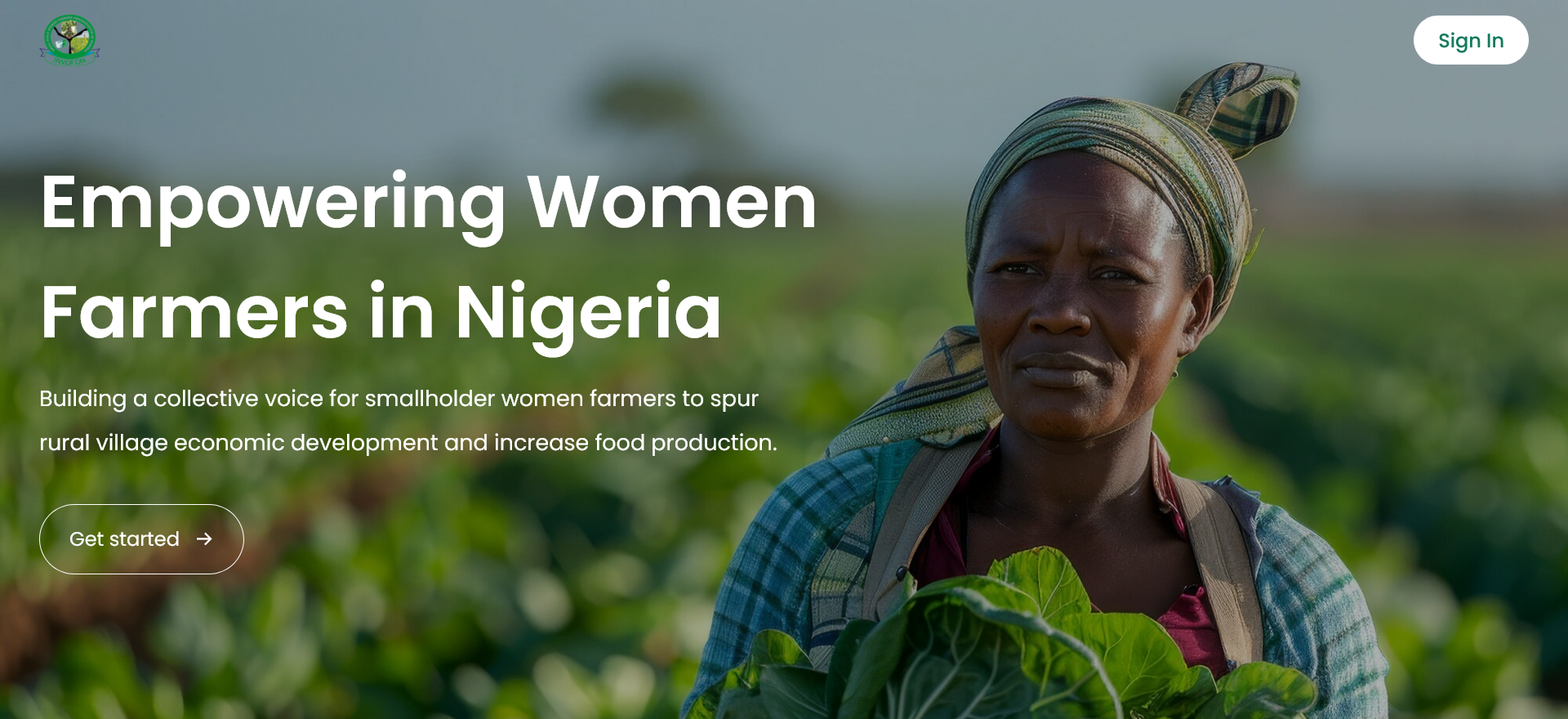
The smallholder women farmers in Nigeria are said to form the backbone of food production, contributing up to 90% of the country’s agricultural output. Yet, their contributions remain largely under-documented and undervalued. With limited access to financial services, land ownership, gender-friendly inputs, and policy support, these women face significant challenges rooted in one central issue: the lack of reliable, gender-disaggregated data.
To close this gap, Dataphyte Foundation, with support from the International Budget Partnership (IBP), partnered with the SmallHolder Women Farmers Organization in Nigeria (SWOFON) to create the first digital, geo-located membership database for women farmers across Nigeria’s 36 states and the FCT. It was about shifting power. For the first time, SWOFON began to map its members across states, understand their unique needs, and organize evidence that could back their demands. When you have the numbers, your voice carries weight. When you know your people, you know what to ask for. Because in the end, data doesn’t just help you tell your story. It helps you demand your rights.
Why This Data Matters
The coalition of the small-scale women farmers in Nigeria (SWOFON) is said to be over 500,000 members. This figure is riddled with uncertainty, inconsistencies due to the absence of structured data. This lack of visibility has led to skewed resource allocation, poor access to government programs, and marginalisation in the distribution of agricultural inputs and services.
Aside from the fact that these women have stood at the heart of food production in rural communities. They are the ones who rise before dawn, till the land with rudimentary tools, nurture crops through unpredictable weather, and carry baskets of produce to markets that barely reward their effort. They are, without exaggeration, the backbone of Nigeria’s agricultural sector.
And yet, they remain largely invisible in the eyes of the system. Several agricultural interventions that look ambituous have been launched at different times by different governments and administrations such as fertilizer subsidies, extension services, mechanisation schemes all costing billions of naira. Despite all these interventions, SWOFON members have continued to echo the same chorus: "We didn't get the loan. We didn’t receive the seedlings. We weren’t invited to the training. We didn’t see the equipment."
So where did the money go? Who are those that benefit from these interventions? etc.
This disjoint isn't always about corruption or negligence, but lack of aggregate data to work with by the government. They don’t know who these women are, where they farm, or what they need. The policymakers design programs from conference rooms in Abuja, with no direct insight into the realities on the ground. They lump everyone into a single category, “farmers”, without disaggregating by gender, location, farm size, or crop type. It’s like trying to treat an illness without a diagnosis.
No matter how well-intentioned the intervention is, it will miss the mark without the consideration of all these. The same few people, often well-connected and male get multiple benefits, while rural women farmers are left behind, watching policies unfold from a distance like guests at their own party.

49% own the land they farm, but only 39% are household decision-makers, limiting their autonomy over land and agricultural investment. More than 20,000 women lack a National Identification Number (NIN), restricting access to credit, subsidies, and government programs. Only 6% have agricultural insurance, and 63% lack access to extension services, further hindering their productivity.
How the Project Was Implemented
Dataphyte deployed its proprietary data collection tool, Goloka, to capture this critical data. A tailored tool was developed to gather demographic, geographic, and socio-economic data points. SWOFON’s network in all 774 LGAs led a hybrid approach, manual collection with subsequent digital entry into Goloka by trained agents, and built-in red-flag features allowed real-time review and approval by Dataphyte’s in-house validators. Once verified, the data was handed over to SWOFON’s national secretariat and relevant MDAs.
Beyond Data: Evidence for Action
This initiative doesn’t just end with data, it begins with it. The data now serves as a living infrastructure for enabling evidence-based allocation of agricultural resources, strengthening SWOFON’s bargaining power to demand their share of Nigeria’s agricultural investments, and providing a concrete basis to implement the National Gender Policy in Agriculture and the Maputo Declaration’s 10% budget commitment to agriculture.
Scaling for National Impact
Building on this pilot, Dataphyte Foundation with continuous support from IBP plans to scale this initiative nationwide by collecting all their data from the 36 states with FCT. This initiative aligns with ongoing government efforts, such as the 2022 National Agricultural Sample Census and the 2025 biometric-linked farmer registry. However, unlike one-off efforts, this database is designed for continuous updates and institutional use bridging the gap between fragmented efforts and sustained data infrastructure.
The SWOFON membership database is more than a spreadsheet.It is a springboard for Nigeria’s agricultural reform. By digitizing and disaggregating data at scale to uplift marginalized groups, inform policy, and empower communities.
Citation
Dataphyte Foundation (2025). “Mapping Nigeria’s Smallholder Farmers for Smarter Policy.” Dataphyte Foundation. Available at: /agriculture/mapping-nigerias-smallholder-farmers-for-smarter-policy
Blog
Strengthening Women Economic Justice in West and Central Africa: Dataphyte Foundation and Christian Aid Hold Inception Workshop