
Beyond Reforms: Why Nigeria’s Economic Growth Depends on Accountability
Published on November 10, 2025
The Nigeria Accountability Summit (NAS) 2025, held in Abuja from October 29–30, brought together more than 400 leaders across government, civil society, academia, the private sector, and development partners to discuss how Nigeria can strengthen accountability to convert policy reforms into tangible growth for its people.
The theme of this year's summit is “Strengthening Accountability for Inclusive Economic Growth.”
The keynote speaker, the Group Chief Economist and Managing Director, Research and Trade Intelligence, Afreximbank, Dr. Yemi Kale, in his keynote speech, described accountability not just as a moral virtue but as a developmental necessity. “When accountability thrives, institutions become stronger, public confidence deepens, and inclusive growth becomes attainable,” he noted.

Headline Panel: Linking Growth and Integrity
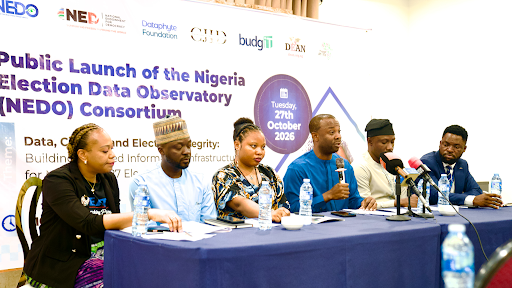
One of the highlights of the summit was a headline panel discussion titled “Strengthening Accountability Systems for Economic Growth and Corruption-Free Governance.” The session explored two critical pillars of the Federal Government’s 8-Point Agenda: Economic Growth and Job Creation and the Fight Against Corruption.
The panel which was moderated by Mr. Vahyala Kwaga, Group Head of Research and Policy Advisory at BudgIT, brought together experts including Mr. Ayodeji Ogunyemi, Partner and Finance Consulting Leader (West Africa) at Ernst & Young; Ms. Chiamaka Nnake, Commissioner for Budget and Economic Planning, Anambra State; Mr. John Okoh Odeh, representing the ICPC Chairman; Mr. Eze Onyekpere, Lead Director, Centre for Social Justice (CSJ); and Mr. Francis Usani, representing the EFCC Chairman, who jointly dissected how transparency and institutional reforms could drive inclusive prosperity.

Collectively, the panelists strongly agreed that economic reforms without accountability are growth without integrity, and growth without integrity is unsustainable.
Nigeria’s Persistent Challenges
Despite progress since the previous summit, such as the completion of the federal audit cycle after 25 years and increased funding for primary healthcare, Nigeria’s economic landscape remains unstable with deep structural issues.

Education: Over 18 million Nigerian children remain out of school, perpetuating cycles of poverty and limiting future workforce potential.
Healthcare: Weak oversight has limited the impact of health investments, with social protection programs still struggling to reach vulnerable groups.
Infrastructure: With an estimated $3 trillion infrastructure gap, opaque procurement and poor project delivery continue to stifle development.
Inflation: Persistent inflation, fluctuating between 20–23%, has eroded citizens’ purchasing power and worsened living conditions.
Governance: Oversight remains weak due to inadequate coordination among accountability institutions and the absence of independent monitoring frameworks.
Citizen Engagement: Citizens, civil society, and the media are often sidelined from accountability processes or perceived as adversaries.
Cultural Barriers: The lack of incentives for integrity and weak social sanctions against corruption make unethical conduct appear normalized.
The consensus across all the breakout sessions was clear: “Nigeria’s economic challenges are not merely financial; they are governance problems rooted in weak accountability.”
Recommendations from NAS 2025
The Nigeria Accountability Summit 2025 did not end with just highlighting issues; it put in place a roadmap for reform, grounded in collaboration, technology, and cultural change.

2. Empower Citizens as Partners: Institutionalise participatory governance frameworks and town hall meetings. Protect whistleblowers and treat CSOs and the media as allies in oversight.
3. Leverage Technology and Open Data: Scale up e-procurement and digital monitoring systems across federal and state levels. Deploy civic-tech tools to track project implementation and spending in real time.
4. Reinforce Checks and Balances: Ensure autonomy for audit institutions and strengthen legislative oversight. Enforce financial crime laws swiftly and fairly to build public confidence.
5. Promote a Culture of Integrity: Recognise and reward ethical behavior in public service. Integrate civic and ethics education in schools and amplify stories of honesty through the media.
6. Reform Institutional Frameworks: Ensure law enforcement agencies act on audit reports, strengthen judicial independence, and establish consequences for delayed or ignored audit responses.
7. Sectoral Focus
Education: Prioritize merit-based teacher recruitment and community involvement in school management.
Healthcare: Improve financial oversight and digitize health budget tracking.
Infrastructure: Adopt open contracting principles and independent project monitoring.
Agriculture: Use data to ensure equitable farmer access to resources.
Digital Economy: Establish accountability mechanisms for large-scale digital infrastructure projects.
Accountability as the Pathway to Inclusive Prosperity
From the keynote to the headline panel and breakout sessions, NAS 2025 stressed one profound truth: “Accountability is not a bureaucratic exercise; it is the lifeblood of national progress.”
Without accountability, reforms remain promises. As Dr. Kale noted, “When accountability ensures that basic infrastructures function optimally, farmers’ success becomes part of a wider story of national progress.”
As Nigeria journeys toward inclusive economic growth, people should not just preach accountability, but they must practice, institutionalize, and celebrate it. Only then can reform evolve into real development, and growth become truly inclusive.
The Nigeria Accountability Summit 2025 was convened by the Paradigm Leadership Support Initiative (PLSI), in collaboration with BudgIT Foundation, Connected Development, Dataphyte, Agora Policy, Accountability Lab Nigeria, Public and Private Development Centre, Socio-Economic Rights and Accountability Project, Step Up Nigeria, Centre for Journalism, Innovation and Development, United Nations Office on Drugs and Crime (Nigeria), Shehu Musa Yar’Adua Foundation, Nigerian Institute for Social and Economic Research (NISER), and the INTOSAI Development Initiative (IDI).
Citation
Dataphyte Foundation (2025). “Beyond Reforms: Why Nigeria’s Economic Growth Depends on Accountability.” Dataphyte Foundation. Available at: /accountability/beyond-reforms-why-nigerias-economic-growth-depends-on-accountability
Blog

Strengthening Women Economic Justice in West and Central Africa: Dataphyte Foundation and Christian Aid Hold Inception Workshop