
Dataphyte Foundation, CPECD Launch Report on Security Overreach and Corruption at Checkpoints
Published on October 31, 2026
Dataphyte Foundation and the Center for Peace Education and Community Development (CPECD) have launched a report documenting widespread human rights violations, bribery and extortion at security checkpoints across Adamawa, Benue and Taraba States.
The report, titled “Addressing Security Overreach and Corruption at Checkpoints in Adamawa, Benue and Taraba States: Safeguarding Civic Space, Human Rights and Public Trust,” found that 81% of respondents reported experiencing human rights violations at checkpoints, while 74% said they had paid bribes. A further 93% said they had never reported the abuses or extortion they experienced.

The research was conducted as part of the Civic Space and Security Project under the Action Group on Free Civic Space (AGFCS), with support from Spaces for Change and the Fund for Global Human Rights. It examined the experiences of road users and security personnel at checkpoints, with a focus on human rights violations, corruption, extortion, and access to redress.
Speaking at the engagement, the Executive Director of CPECD, Dr. Joseph Gimba, said the stakeholder meeting was convened to bring the research findings to the attention of relevant government institutions and security agencies and to create a platform for stakeholders to discuss possible responses.

Photo: Dataphyte Foundation
Executive Director of CPECD, Dr. Joseph Gimba
Presenting the findings on behalf of Dataphyte Foundation, Programme Manager Abdulahi Adebayo highlighted the experiences of road users at checkpoints, including reported cases of human rights violations, bribery and corruption, as well as the difficulties victims face in seeking redress.
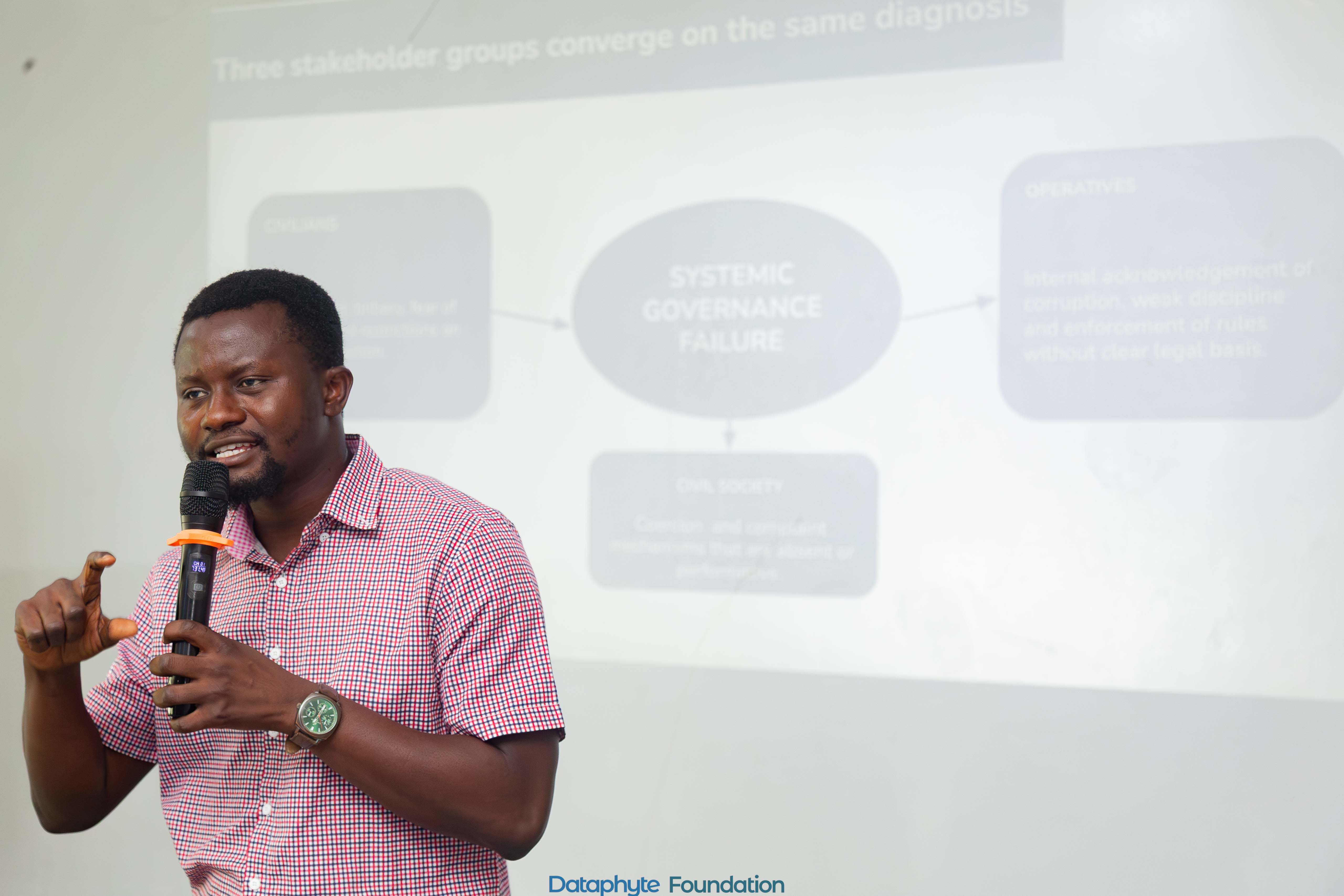
Abdulahi Adebayo, Dataphyte Foundation Programme Manager
The research also captured concerns from security operatives interviewed. Some reportedly said they faced pressure from their supervisors to remit illicit funds collected at checkpoints, pointing to possible institutional factors that may contribute to corrupt practices.
Stakeholders at the engagement also shared their experiences of checkpoint operations.
A representative of the National Union of Road Transport Owners (NARTO) commended CPECD and its research partners for documenting the experiences of road transport operators. He recounted challenges faced by drivers and transport companies and presented photographic evidence of alleged human rights abuses involving drivers at checkpoints.

According to him, frequent stops at checkpoints affect transport operations by increasing vehicle wear and tear, contributing to driver fatigue, causing delays, and increasing operating costs. He added that extortion further reduces the returns of transport operators and increases the financial burden on businesses and, ultimately, consumers.
The Executive Director of Headfort Foundation for Justice, Oluyemi Orija, also commended the research partners for generating evidence on the human rights implications of checkpoint operations.
She stressed the importance of making the findings accessible to a wider audience, noting that research would have limited public impact if its findings remained confined to lengthy reports that many people may not read.
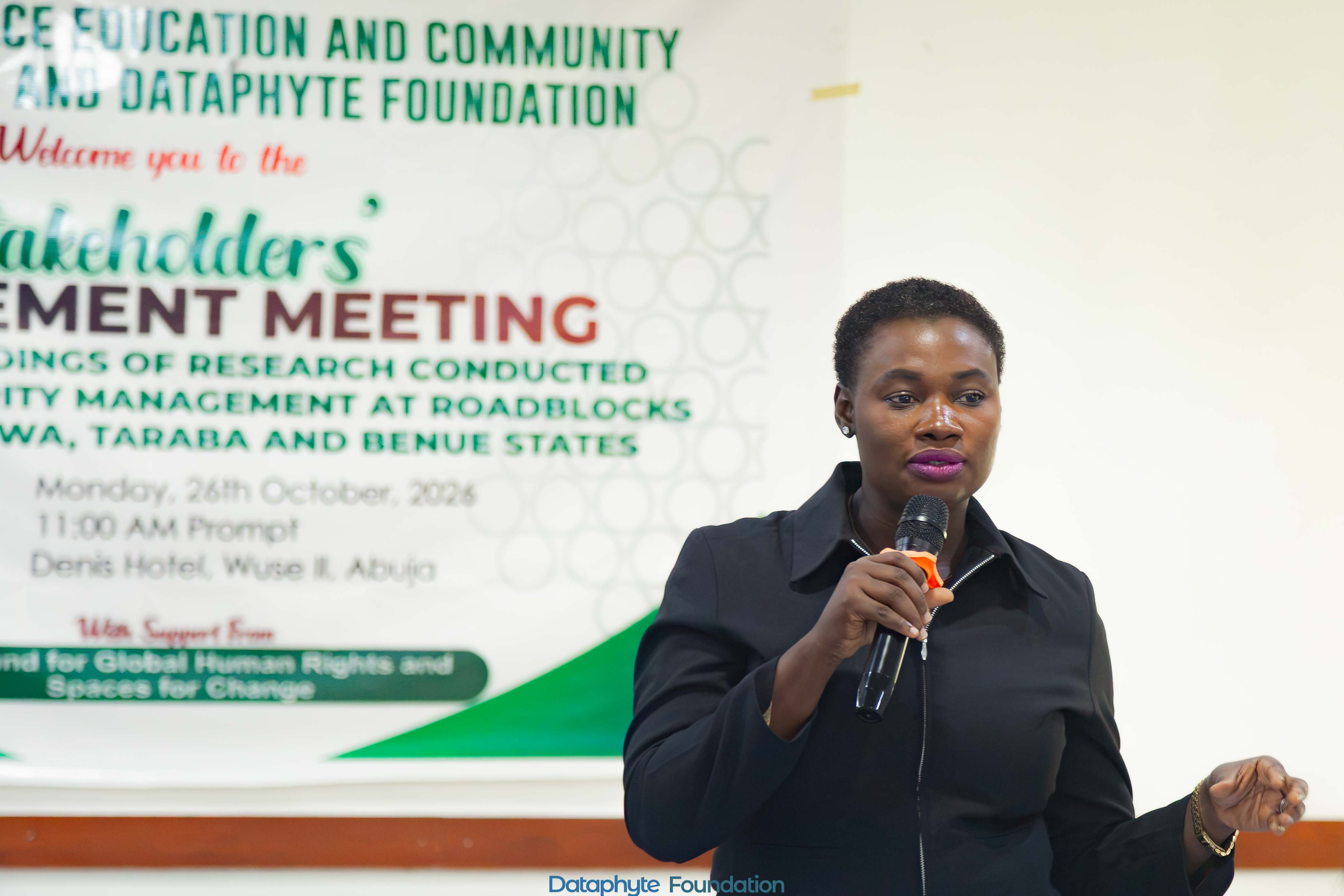
Executive Director of Headfort Foundation for Justice, Oluyemi Orija
Orija also called for continuous training for security personnel, particularly officers at the lower operational levels who are directly involved in checkpoint operations. She emphasised that such training should not be treated as a one-off intervention but institutionalised through regular programmes and dedicated budgetary allocations.
The research presented several recommendations, including the establishment of independent oversight mechanisms to monitor checkpoint operations and strengthen accountability for misconduct; institutionalisation of human rights and behavioural training for security personnel; and improvements in the welfare and working conditions of security operatives to address factors that may contribute to misconduct.
Following the presentation and stakeholder discussions, the research report was officially launched.

The report is expected to support advocacy efforts aimed at strengthening accountability, protecting human rights, and improving the effectiveness and professionalism of security management along Nigeria's roads.
As part of the follow-up to the research and stakeholder engagement, the National Committee Against Human Rights Abuse at Checkpoints in Nigeria was inaugurated. The committee will support advocacy and efforts to promote the implementation of recommendations arising from the research.
In his closing remarks, the founder of Elixir Trust Foundation thanked participants for their contributions and expressed appreciation to the organisations involved for their collaboration and commitment to addressing the challenges documented by the research.
The engagement concluded with a group photograph following the launch of the report and the inauguration of the National Committee Against Human Rights Abuse at Checkpoints in Nigeria.
Citation
Dataphyte Foundation (2026). “Dataphyte Foundation, CPECD Launch Report on Security Overreach and Corruption at Checkpoints.” Dataphyte Foundation. Available at: /security/dataphyte-foundation-cpecd-launch-report-on-security-overreach-and-corruption-at-checkpoints