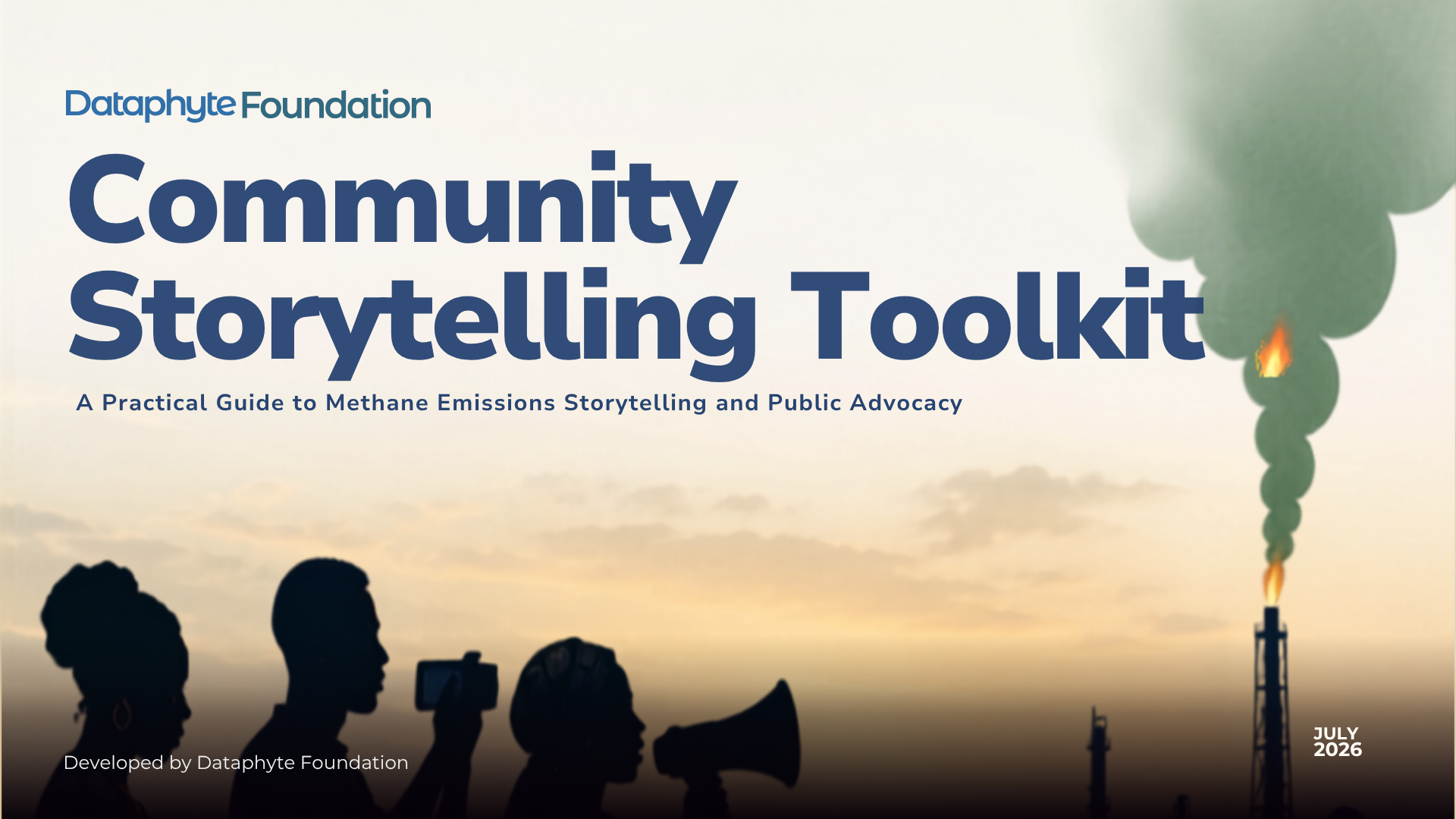
The Community Storytelling Toolkit is a practical guide developed by Dataphyte Foundation, with support from the Centre for Journalism Innovation and Development (CJID) and the Natural Resource Governance Institute (NRGI), to help youth advocates, community members, civil society organisations, and journalists turn methane emissions data into compelling, evidence-based stories. Written entirely in plain language with no assumed background knowledge, it walks users through the Emissions Monitoring and Accountability Tool (EMAT) free platform, and introduces the 7-Box Framework, a repeatable seven-question method for building any story, from a full investigative article to a three-line social post.
The toolkit also provides ready-to-use templates across five formats (articles, social media, radio, photo essays, and short video), guidance on finding and interviewing community sources, a right-of-reply process, and ethics and safety guidelines for fieldwork in flaring-affected communities. It closes with a quick-reference checklist to guide every advocate through fairness, consent, and accuracy before publishing.
Developed under the Deepening Methane Emissions Transparency Initiative – Stream II, the toolkit is designed to build a distributed, community-level accountability pipeline around Nigeria's methane commitments, including the Global Methane Pledge and its Nationally Determined Contribution targets.
Blog

Primary Health Centre Performance And Universal Health Coverage In Nigeria: A Governance And Accountability Approach To BHCPF Reform
BACKGROUND
Primary Health Centres (PHCs) are the

Dataphyte Country Director Advocates Participative AI Governance at Global Democracy Coalition Webinar
Dataphyte Foundation Country Director, Oluseyi Olufemi, has highlighted the importance of...
Dataphyte to Deliver Live Updates on the 2026 Ekiti Governorship Election
Dataphyte is pleased to announce its plans to provide real-time updates and election coverage...