What the Toolkit Contains
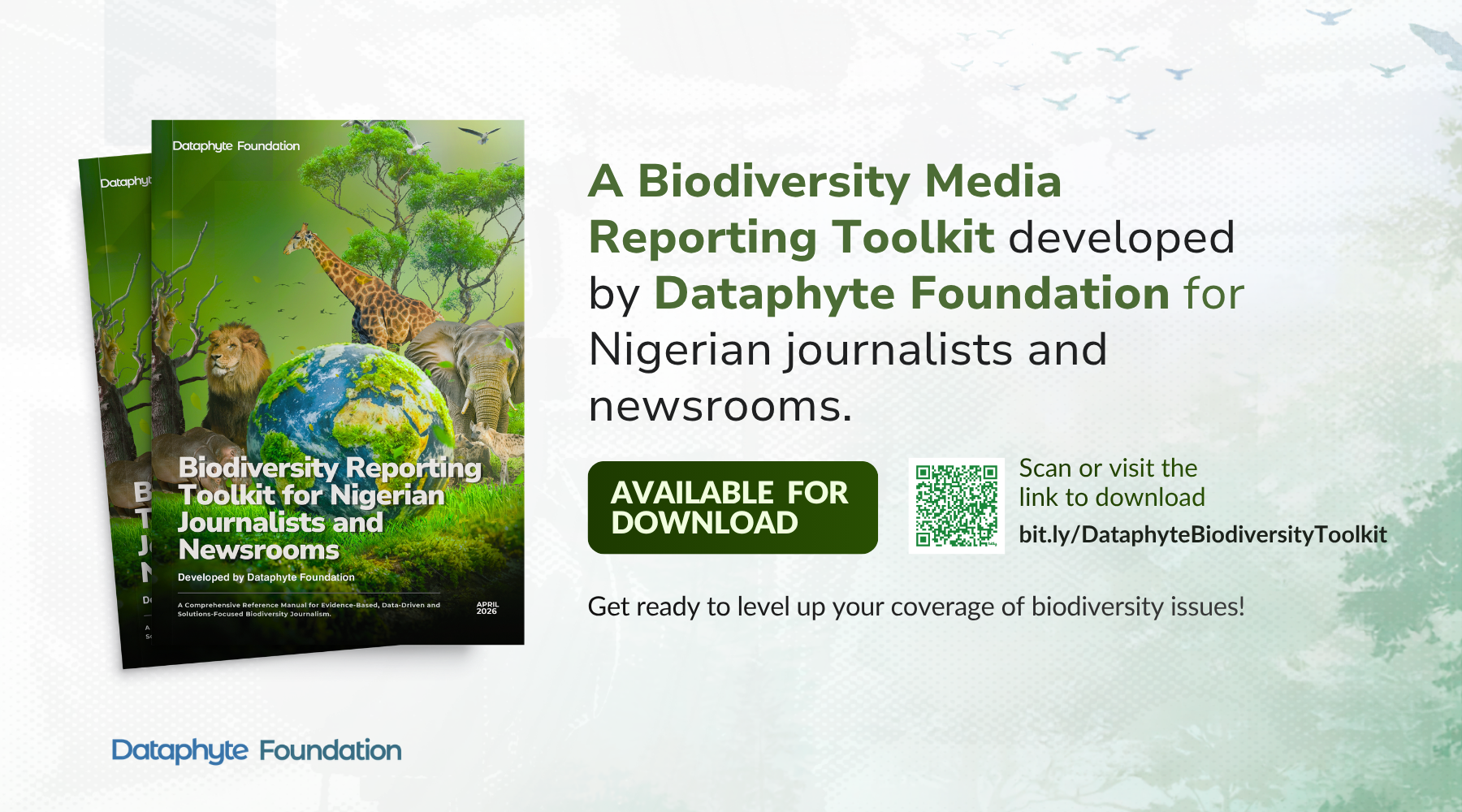
The toolkit is a comprehensive reference manual spanning nine sections and over 100 pages of practical, field-tested guidance. It covers:
• Nine thematic sections covering biodiversity fundamentals, journalism foundations, data-driven reporting, field reporting, writing and publishing, newsroom integration, and localisation strategies.
• Eight in-depth case studies drawn from ten commissioned data-driven investigations across four geopolitical zones, including Akwa Ibom, Cross River, Ogun, Rivers, Kano, Sokoto, Edo, and the FCT.
• Practical data tools guidance covering Global Forest Watch, NASA EarthData, NOSDRA Oil Spill Monitor, Open Treasury Nigeria, QGIS mapping, IUCN Red List, and more.
• The Dataphyte 7-Box Story Model: a structured framework for evidence-based, data-driven biodiversity storytelling.
• Ethical and safety guidelines for journalists reporting in conflict-affected, environmentally sensitive, and community-based settings.
• A comprehensive annexes section including FOI request templates, a glossary of biodiversity terms, story idea prompts by ecosystem type, and recommended reading.
• Strategic recommendations for newsrooms to institutionalise biodiversity as a sustained editorial beat, not a one-off project.
At the heart of the toolkit are eight case studies documenting investigations into infrastructure-driven biodiversity loss in Akwa Ibom, conservation conflicts at Okomu National Park, human-elephant conflict in Cross River, biodiversity loss in conflict-affected northern Nigeria, chronic oil pollution in Ogoniland, coastal erosion in Ogun State, urban green space loss in Abuja, and youth-led conservation initiatives across multiple states. Each case study documents the journalist's full reporting journey, from story conception through data collection, fieldwork, publication, and impact.
Transforming Nigeria's Media Landscape
The toolkit is part of Dataphyte Foundation's broader Biodiversity Media Programme, which envisions a Nigerian media landscape where biodiversity and environmental issues are reported with depth, accuracy, and accountability. The programme commissioned ten investigative journalists to produce data-driven stories across Kano, Sokoto, Rivers, Ogun, Edo, Cross River, and the FCT, generating a body of evidence that forms the backbone of this resource.
Through its Biodiversity Media Observatory, Dataphyte Foundation will continue to monitor coverage, train journalists, host open datasets, and facilitate collaborative cross-newsroom investigations.
Who Should Use This Toolkit
The toolkit is designed for student journalists and early-career reporters; practising journalists seeking to strengthen investigative and data skills; editors and newsroom managers building capacity for biodiversity reporting; media trainers and journalism educators; and media units in relevant civil society and government organisations. While focused on Nigeria, its principles and methodologies are applicable across Africa and the Global South.
Access the Toolkit
The Biodiversity Reporting Toolkit for Nigerian Journalists and Newsrooms is available for free download at https://bit.ly/DataphyteBiodiversityToolkit. Newsrooms and media training institutions interested in training partnerships are encouraged to contact Dataphyte Foundation directly.
Media Contact:
Website: dataphyte.org
Email: [email protected]
Twitter/X: @dataphytefdn